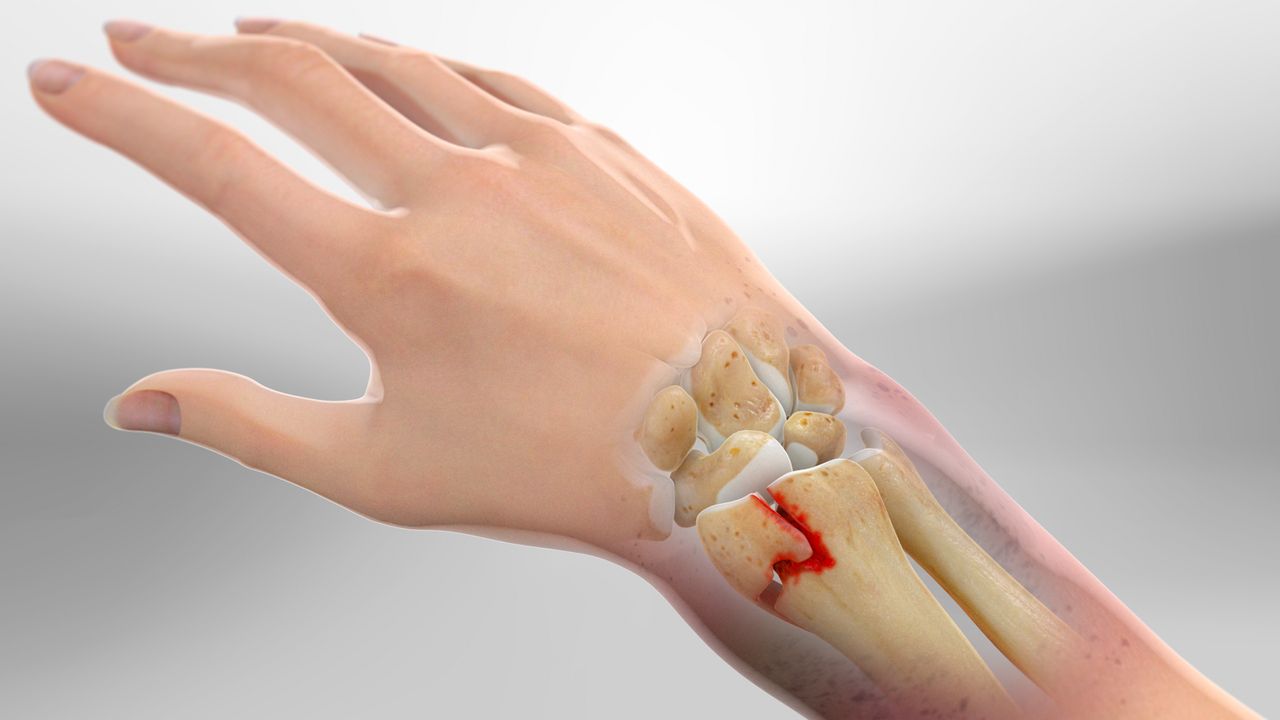
Distal radius fractures are among the most common fractures in adults. Modern volar plate fixation allows earlier movement and faster return to function.
What is Wrist Fractures?
A wrist fracture typically refers to a fracture of the distal radius — the larger forearm bone at the wrist. It is the most common fracture in adults, occurring most often from a fall on an outstretched hand. Colles fracture (dorsal displacement), Smith fracture (volar displacement), and intra-articular fractures involving the wrist joint are the main patterns.
While many distal radius fractures can be managed in a cast, displaced, unstable, or intra-articular fractures achieve better functional outcomes with surgical fixation. Malunion with residual deformity causes weakness, stiffness, and pain that is difficult to correct later. Early specialist assessment ensures the right treatment choice.
Symptoms
Symptoms
Wrist pain, swelling, and bruising after a fall
Visible deformity — "dinner fork" deformity in dorsally displaced fractures
Tenderness over the distal radius
Inability to use the hand or wrist
Associated numbness or tingling — median nerve may be involved
Wrist stiffness developing over days to weeks
How it is diagnosed
X-ray (AP and lateral wrist) — confirms fracture pattern and displacement
CT scan for complex intra-articular fractures to plan surgery
Assessment for associated ligament injury (TFCC, SL ligament)
Neurovascular examination — assess for acute carpal tunnel syndrome
Non-surgical Treatment
Non-surgical options
Below-elbow plaster cast for stable, undisplaced fractures
Closed reduction and cast for acceptably reducible fractures
Serial X-rays to monitor position during healing
Physiotherapy after cast removal to restore wrist movement
When to consider surgery
Volar plate fixation is the standard surgical treatment for unstable or displaced distal radius fractures. A titanium plate and screws secure the fracture from the palm side of the wrist, allowing immediate wrist movement and a faster return to function. Arthroscopic-assisted reduction ensures precise joint surface restoration in intra-articular fractures.
Volar plate fixationArthroscopic-assisted optionEarly mobilisationDay or overnight surgery
Recovery Expectations
Typical recoveryCast treatment: 6 weeks immobilisation, then physiotherapy. Surgical fixation: immediate gentle movement, return to desk work 4–6 weeks, manual work 3–4 months. Physiotherapy is essential after both cast and surgical treatment.
When to see a Hand Surgeon
Seek specialist assessment if:Any wrist fracture with displacement or deformity. Fracture position not maintained in cast on follow-up X-ray. Intra-articular fracture involving the joint surface. Numbness or tingling in the fingers after a wrist fracture.
Frequently asked questions
Common questions about wrist fractures, answered by Dr David Ma.
No. Undisplaced or minimally displaced fractures that maintain their position in a cast can be managed non-operatively. Surgery is indicated when the fracture is displaced, unstable, intra-articular, or if position is lost after initial reduction.
A titanium plate is attached to the palmar surface of the distal radius with locking screws. The plate holds the fracture fragments in correct position while healing occurs, allowing the wrist to be moved early. The plate is typically left in permanently unless it causes problems.
Gentle finger movement begins immediately. Wrist movement starts at 1–2 weeks. Return to desk work at 4–6 weeks. Lifting restrictions apply for 3–4 months. Hand therapy is an important part of recovery.
Intra-articular fractures carry a risk of post-traumatic arthritis, particularly if joint surface restoration is not perfect. Modern fixation techniques and arthroscopic-assisted surgery minimise this risk. Wrist arthritis, if it develops, is usually manageable.
A GP referral is recommended for Medicare rebates but not required to book.
Dr David Ma performs wrist fracture fixation at accredited Sydney facilities.
Consultations at Chatswood (North Shore — Lane Cove, Willoughby, Artarmon, St Leonards, Gordon)
and Strathfield (Inner West — Burwood, Homebush, Rhodes, Concord, Auburn, Newington).
Call (02) 8112 8569 or email admin@drdavidma.com.