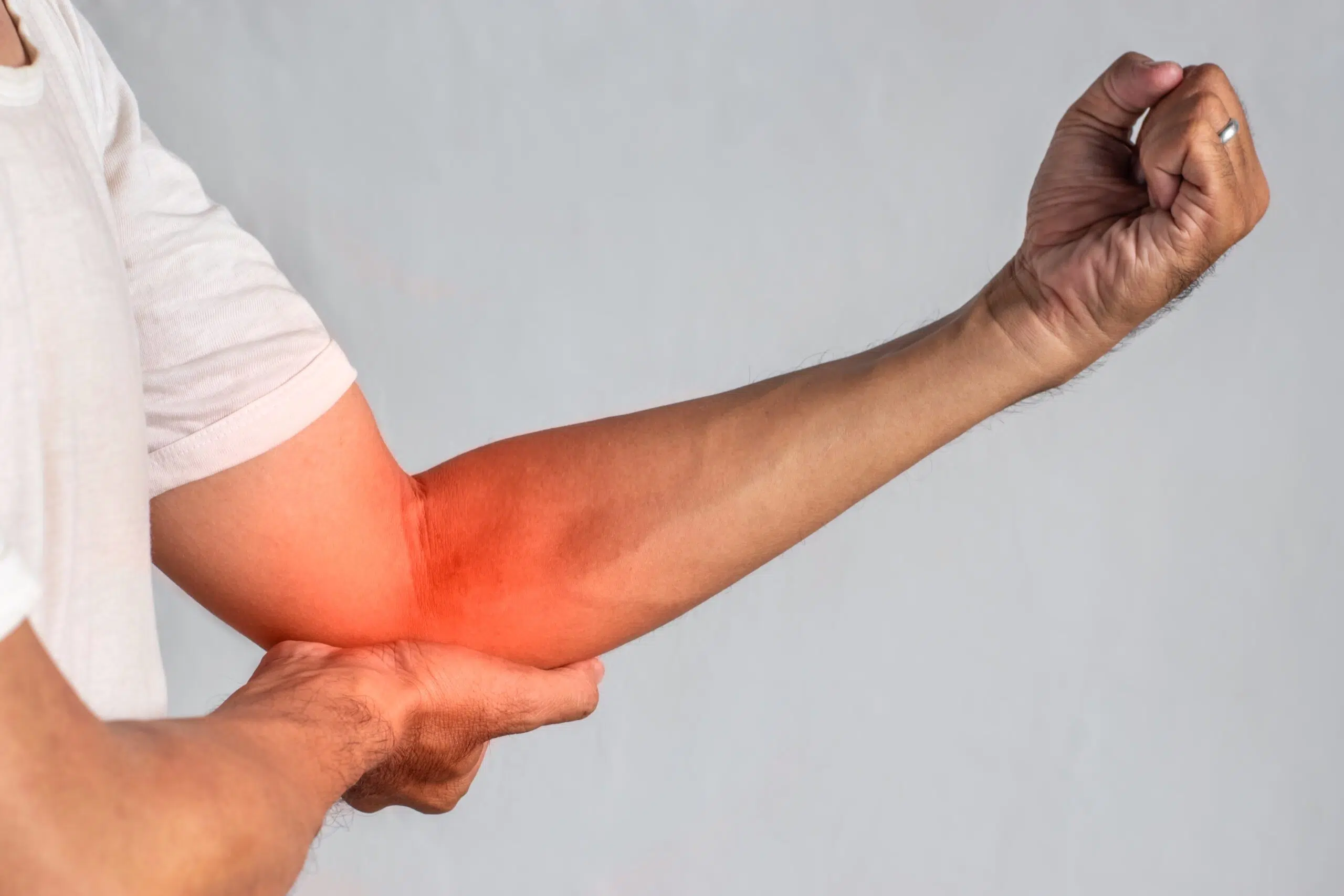
Ulnar nerve compression at the elbow — numbness and tingling in the little and ring fingers. Surgical decompression when conservative measures fail.
What is Cubital Tunnel Syndrome?
Cubital tunnel syndrome is compression of the ulnar nerve at the elbow — the second most common peripheral nerve compression after carpal tunnel syndrome. The ulnar nerve passes through the cubital tunnel behind the medial epicondyle (the "funny bone") and is vulnerable to compression and stretch, particularly with prolonged elbow flexion.
The ulnar nerve supplies sensation to the little finger and part of the ring finger and controls most of the intrinsic muscles of the hand. Prolonged compression causes progressive weakness and wasting of the hand muscles if untreated. Early diagnosis and treatment gives the best outcome.
Symptoms
Symptoms
Numbness and tingling in the little and ring fingers — worse with elbow flexion
Symptoms aggravated by talking on the phone, reading, or sleeping with the arm bent
Weakness of grip or fine pinch
Clawing of the little and ring fingers in advanced cases
Wasting of the hypothenar and interossei muscles
Pain or aching along the inner elbow
How it is diagnosed
Clinical examination — Froment's test, elbow flexion test
Nerve conduction studies (NCS) and EMG — confirm diagnosis and severity
Ultrasound — assess nerve cross-sectional area and subluxation
X-ray elbow if bony pathology is suspected
Non-surgical Treatment
Non-surgical options
Elbow padding during the day to avoid direct nerve compression
Night splinting in slight elbow extension to prevent prolonged flexion
Surgical decompression releases the constricting fascial bands over the ulnar nerve. In-situ decompression is effective for most cases. When the nerve is unstable (subluxing over the medial epicondyle) or the anatomy is unfavourable, anterior transposition — moving the nerve to the front of the elbow — is performed.
In-situ decompressionAnterior transposition optionDay surgeryLocal or regional anaesthetic
Recovery Expectations
Typical recoveryIn-situ decompression: light activities are generally possible from 2–3 weeks, though the elbow and forearm can remain sensitive for considerably longer. Return to work varies — sedentary roles may resume in 3–4 weeks, but those involving physical or repetitive tasks should expect 4–6 weeks or more. Nerve recovery begins after decompression and is gradual — sensory improvement typically comes before motor recovery. Heavier activities are reintroduced progressively and depend on how the nerve responds. Full recovery can take months and varies with the severity and duration of compression.
When to see a Hand Surgeon
Seek specialist assessment if:Numbness in the little and ring fingers that persists despite activity modification and night splinting. Any weakness or wasting of the hand muscles. Nerve conduction studies showing significant ulnar nerve compression at the elbow.
Frequently asked questions
Common questions about cubital tunnel syndrome, answered by Dr David Ma.
Mild cubital tunnel syndrome can be managed with elbow padding and night splinting. Moderate to severe compression, especially with any weakness or wasting, warrants surgical consideration. Nerve damage that is already established does not reverse itself without decompression.
Sensory symptoms often begin to improve within weeks. Motor recovery is slower, taking months, and may be incomplete if compression has been longstanding. Surgery arrests the progression — recovery is not always complete, particularly in severe cases.
Anterior transposition moves the ulnar nerve from behind the elbow to a position in front of it, placing it under the flexor muscles (submuscular) or under the skin (subcutaneous). This prevents the nerve from being stretched with elbow bending.
Yes. Advanced cubital tunnel syndrome causes weakness of the intrinsic hand muscles, leading to difficulty with fine motor tasks such as typing, buttoning, or playing an instrument. Muscle wasting of the hand can be visible. This is why early treatment is important.
A GP referral is recommended for Medicare rebates but not required to book.
Dr David Ma performs cubital tunnel decompression at accredited Sydney facilities.
Consultations at Chatswood (North Shore — Lane Cove, Willoughby, Artarmon, St Leonards, Gordon)
and Strathfield (Inner West — Burwood, Homebush, Rhodes, Concord, Auburn, Newington).
Call (02) 8112 8569 or email admin@drdavidma.com.