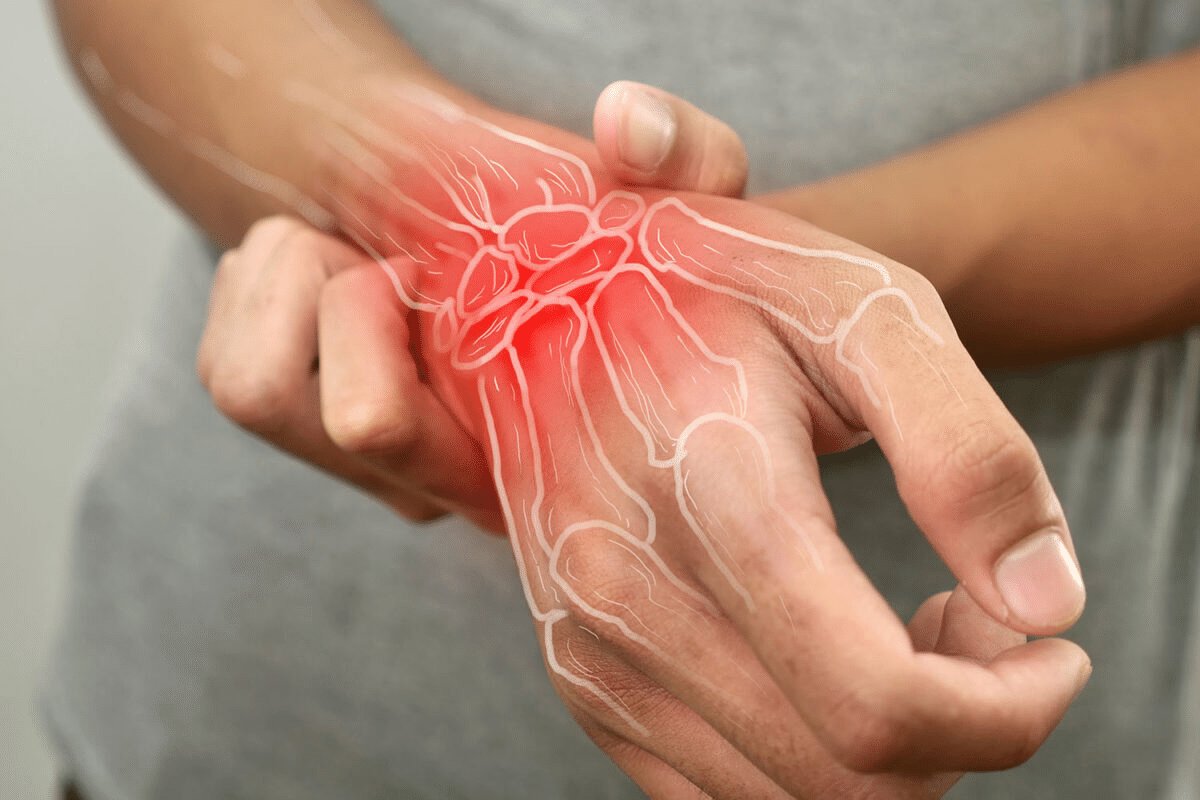
SLAC wrist, SNAC wrist, and degenerative wrist arthritis — progressive pain and stiffness with multiple surgical reconstruction options.
What is Wrist Arthritis?
Wrist arthritis involves the progressive loss of cartilage in the joints of the wrist. The most common patterns are SLAC wrist (scapholunate advanced collapse — following scapholunate ligament injury), SNAC wrist (scaphoid non-union advanced collapse), and primary osteoarthritis. Inflammatory arthritis (rheumatoid) can also affect the wrist.
Wrist arthritis causes progressive pain, stiffness, and weakness. The pattern of arthritis determines which surgical options are most appropriate — from joint-preserving procedures to partial or total wrist fusion or replacement.
Symptoms
Symptoms
Persistent aching wrist pain, worse with activity
Stiffness — particularly in the morning
Loss of wrist flexion and extension
Weakness of grip
Bony swelling or visible joint deformity
Grating or grinding with wrist movement
How it is diagnosed
X-ray — pattern of joint space narrowing and arthritis staging
CT scan for detailed assessment of arthritic changes
MRI for associated soft tissue and cartilage evaluation
Assessment of wrist range of motion and grip strength
Non-surgical Treatment
Non-surgical options
Wrist splinting for activity and at rest
Anti-inflammatory medications and activity modification
Corticosteroid injection for short-term pain relief
Physiotherapy for muscle strengthening and function optimisation
When to consider surgery
Surgical options depend on the pattern and stage of arthritis. Proximal row carpectomy (PRC) removes three wrist bones to create a new pain-free articulation with preserved motion — suitable for early to moderate SLAC/SNAC. Four-corner fusion (4CF) fuses four carpal bones and is suited to patients where motion preservation is secondary to stability and pain relief. Total wrist fusion eliminates pain at the cost of motion. Wrist replacement is an option in selected lower-demand patients.
Typical recoveryProximal row carpectomy or four-corner fusion: immobilisation 8–10 weeks, physiotherapy 3–6 months, full recovery 6–12 months. Total wrist fusion: permanent loss of wrist flexion/extension but reliable pain relief.
When to see a Hand Surgeon
Seek specialist assessment if:Progressive wrist pain and stiffness limiting daily activities. Failure to achieve adequate pain relief with splinting and injections. Known SLAC or SNAC wrist with progressive symptoms. Any significant wrist injury that has not been assessed by a specialist.
Frequently asked questions
Common questions about wrist arthritis, answered by Dr David Ma.
SLAC (scapholunate advanced collapse) is the most common pattern of wrist arthritis, developing after scapholunate ligament injury. Arthritis progresses in a predictable sequence — early treatment of the underlying ligament injury can prevent or delay its development.
Proximal row carpectomy (PRC) involves surgical removal of three wrist bones (scaphoid, lunate, and triquetrum) to create a new, pain-free articulation. It preserves a useful arc of wrist movement and is one of the most effective procedures for early to moderate wrist arthritis.
This depends on the procedure. PRC and four-corner fusion preserve some wrist movement — typically 40–60% of normal range. Total wrist fusion eliminates pain reliably but removes all wrist flexion and extension. Dr Ma discusses the expected range of motion for each option.
Total wrist replacement is available and suited to lower-demand patients with inflammatory arthritis or degenerative arthritis. It offers better motion than fusion but has higher revision rates. Dr Ma discusses whether replacement is appropriate for your specific situation.
A GP referral is recommended for Medicare rebates but not required to book.
Dr David Ma treats wrist arthritis at accredited Sydney facilities.
Consultations at Chatswood (North Shore — Lane Cove, Willoughby, Artarmon, St Leonards, Gordon)
and Strathfield (Inner West — Burwood, Homebush, Rhodes, Concord, Auburn, Newington).
Call (02) 8112 8569 or email admin@drdavidma.com.